
Re-Imagining The Profession
A Workforce Development Blog Series | Part 1 of 5
The State of the Crisis: Why Construction Is at a Crossroads
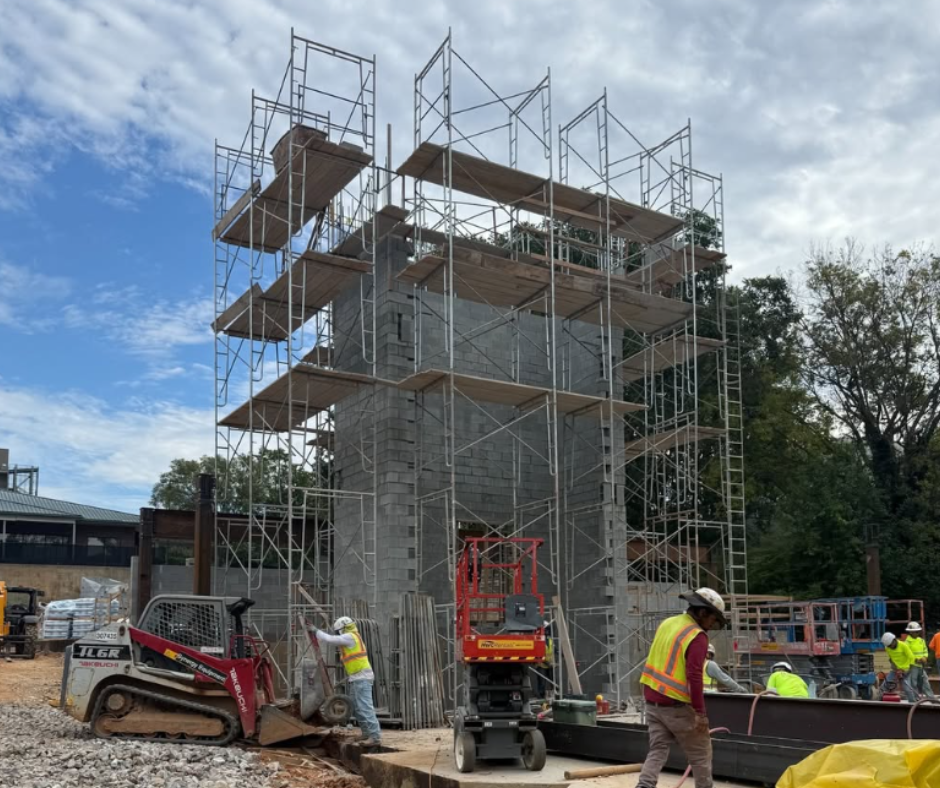
There is a quiet, but tsunami sized crisis unfolding across America’s cities, highways, and neighborhoods — one that doesn’t make front-page news but shapes every aspect of how we live, work, and recreate. The construction industry makes up approximately 4.5 percent of the U.S. Gross Domestic Product (GDP), and contributes over $1.3 Trillion annually to the U.S. economy. Construction is the backbone of the built environment, but oddly enough is running out of builders.
This isn’t a new problem. It has been slowly developing for decades, driven by an aging workforce, a cultural narrative that devalued the trades, and an education system that funneled nearly everyone toward a four-year college degree. But in 2026, the convergence of skyrocketing demand and a shrinking labor pool has pushed the industry to an inflection point — one that demands not incremental adjustment, but fundamental reinvention….a reimagination of the profession.
The Numbers Tell a Sobering Story
The industry will need 349,000 net new workers in 2026 alone —
rising to 456,000 by 2027. — Associated Builders and Contractors (ABC), January 2026
According to the Associated Builders and Contractors (ABC), the construction industry must attract approximately 349,000 new workers in 2026 beyond normal hiring just to keep pace with project demand. That figure climbs to an estimated 456,000 additional workers in 2027 as federal infrastructure programs, data center expansion, and manufacturing reshoring accelerate activity across every region of the country.
These projections aren’t abstractions — they translate directly to project delays, budget overruns, and unmet community needs. The Associated General Contractors of America (AGC) confirms that labor shortages are causing delays for 45% of construction firms today.
41% of the current construction workforce is projected to retire by
2031. — National Center for Construction Education and Research (NCCER)
The National Center for Construction Education and Research (NCCER) projects that roughly 41% of the current construction workforce will retire by 2031. With approximately one in five construction workers currently over the age of 55, the industry faces a compressed timeline to transfer decades of learn by doing expertise to the next generation of construction industry
participants. Construction is an applied science which means the knowledge transfer cannot simply be downloaded or automated, it must be learned and experienced over time for optimal absorption and application.
A Structural Problem, Not a Cyclical One
It would be tempting to frame the workforce shortage as a temporary blip — a post-pandemic disruption that will self-correct. But the data points to something far more structural. As many statistics have noted that, the shortage is driven by aging demographics, accelerated retirements, shifting immigration patterns, and a generation that was actively steered away from the trades.
Consider this: the median age of a U.S. construction worker is 42 — one year older than the national workforce median, according to the National Association of Home Builders (NAHB). While the share of Gen Z workers in construction has more than doubled between 2019 and 2023, that growth has not been sufficient to offset retirement losses, and the lost generation discouraged from joining the profession.
85% of construction firms report having open positions they are
actively trying to fill. — AGC / Autodesk Workforce Survey
Meanwhile, 68% of surveyed construction firms report that applicants lack basic required skills, and a startling one-third of applicants cannot pass a basic drug test — revealing that the problem isn’t just a pipeline shortage, it’s a pipeline quality and workforce readiness challenge.
The Opportunity Within the Crisis
In the midst of such historic talent shortages lies a moment of extraordinary opportunity. The data center construction boom — fueled by the AI revolution and over 400 projects currently under development by companies like Amazon, Google, and Microsoft — is creating construction jobs that pay up to 30% more than typical construction work. Infrastructure legislation has unlocked funding streams that will drive demand for years. A generation of young people increasingly skeptical of the college at-all-costs narrative, and hungry for meaningful skill attainment are ready, willing, and able to join the most creative industry in the world.
The road to opportunity in construction is wide and long. The question is whether the construction industry will meet the moment. The industry must act now to capture the talent of today and harness it into the industry leadership of tomorrow.
What Comes Next
Over the next four installments of this series, we will explore the practical and cultural strategies that can transform construction into a profession of genuine first choice. We will examine how to rebrand the industry, build people-first cultures, rethink educational pathways, and develop the kind of talent sourcing strategy that attracts the best and the brightest not only the last and the least.
All great things are built. The construction industry built this country. Now it is time to reimagine the profession for the nation builders of the future.